
In a dramatic escalation of U.S. immigration policy, the Biden–era asylum framework has come under sweeping suspension after a deadly shooting involving an Afghan national shook Washington this week. President Donald Trump’s administration announced a complete halt to all asylum decisions, linking the move to renewed national security concerns.
Joseph Edlow, Director of the U.S. Citizenship and Immigration Services (USCIS), confirmed Friday that the agency has paused every pending asylum decision. He stated that the freeze will remain until authorities can guarantee “maximum-level vetting” for every applicant entering the United States.
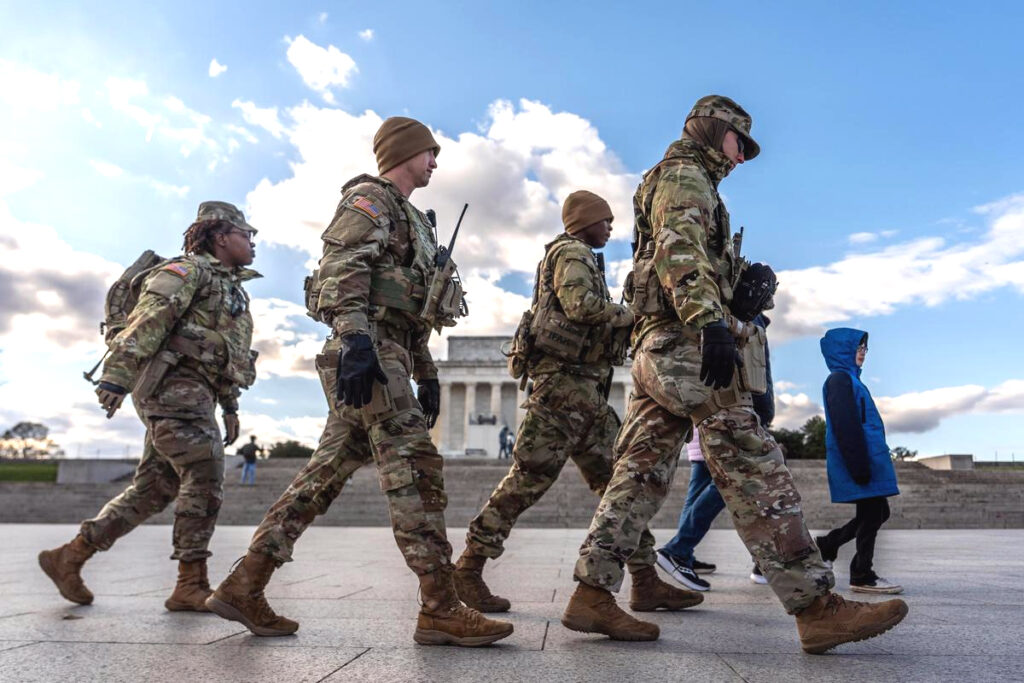
The decision follows the November 26 shooting, in which 29-year-old Rahmanullah Lakanwal, an Afghan national once part of a CIA-supported force, allegedly opened fire on two National Guard soldiers stationed near the White House.
The attack claimed the life of 20-year-old Private Sarah Beckstrom, while 24-year-old Andrew Wolfe remains in critical condition.
A Political Flashpoint Ignited
The incident has quickly merged three of the most divisive issues in American politics: military deployment on U.S. soil, immigration enforcement, and the lingering consequences of the two-decade war in Afghanistan.
President Trump responded by announcing plans to “permanently pause migration from all Third World countries,” expanding upon pre-existing travel restrictions imposed earlier in the year. When asked for specifics, the Department of Homeland Security referred to a list of 19 nations, including Afghanistan, Cuba, Iran, Haiti, and Myanmar, already under tightened U.S. entry limits.
Secretary of State Marco Rubio added that the United States has temporarily suspended all visa processing for Afghan passport holders, citing national safety as the administration’s highest priority.
Suspect’s Background Under Scrutiny
According to officials, Lakanwal entered the United States in 2021 through a special resettlement program instituted after the U.S. military withdrawal from Afghanistan. AfghanEvac, an organization involved in the evacuation and relocation of at-risk Afghans, criticized the sweeping crackdown, calling it a long-planned political move masked by a single violent act.
The group emphasized that Afghans brought to the U.S. underwent some of the most extensive security screening procedures in modern immigration history. They also clarified that while
Lakanwal applied for asylum during the Biden administration, his approval came later under President Trump.
Lakanwal, who lived in Washington State with his family, reportedly drove across the country before carrying out the shooting. U.S. Attorney Jeanine Pirro announced murder charges against him, while Attorney General Pam Bondi labeled him a “monster” and vowed to pursue the death penalty.
Green Cards Also Under Re-Evaluation
In a parallel measure, USCIS revealed that it will re-examine green cards issued to individuals from the same 19 restricted countries. The move could impact over 1.6 million permanent residents, including more than 116,000 Afghans currently holding U.S. green cards.
A Nation on Edge
As America grapples with the fallout of the tragic shooting, fear and political tension are rising in equal measure. Critics warn that the government’s sweeping response risks punishing millions for the actions of one man. Supporters argue that the latest security breach proves the urgent need for uncompromising vetting.
With asylum decisions frozen, visas blocked, and green cards under renewed scrutiny, the United States enters a new and uncertain chapter in its immigration policy — one poised to shape national debate for months, if not years, to come.