
Manashimaya
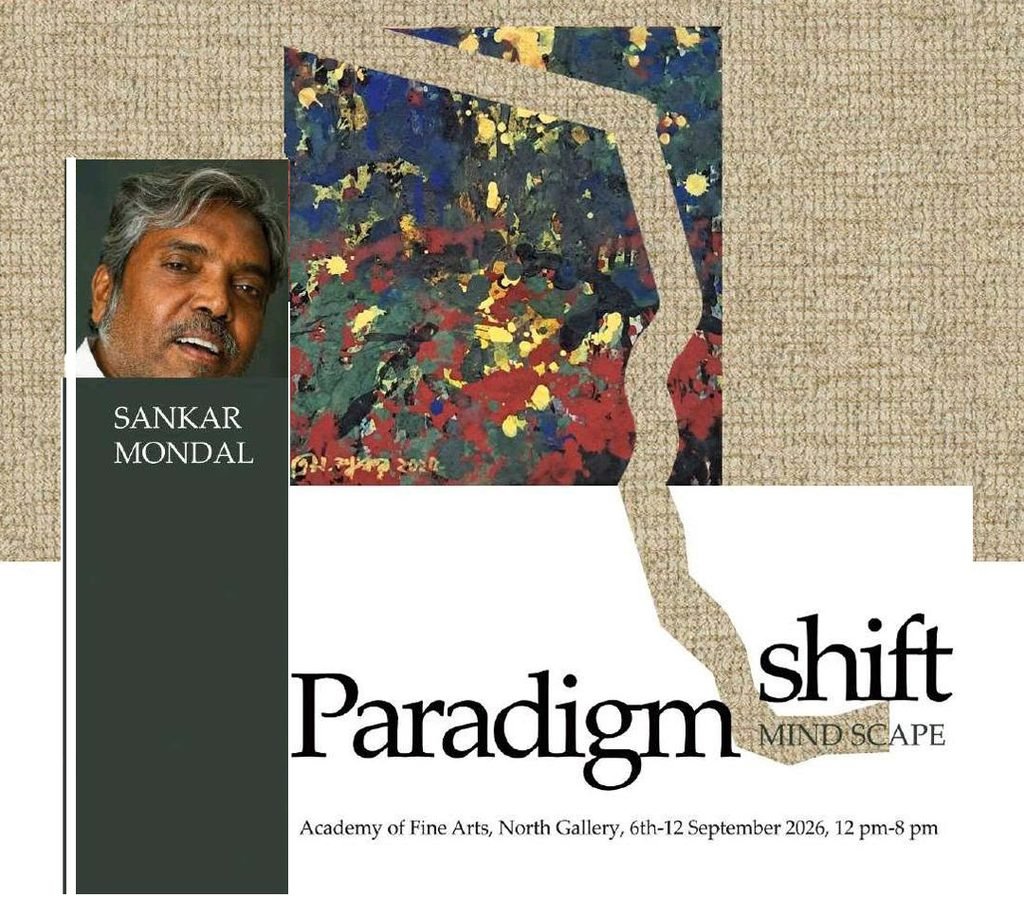
A paradigm shift does not happen overnight. It begins with a movement, a questioning, or a moment of realization that gradually transforms the way we perceive the world. For an artist, such a transformation can become a profound journey—from an established creative vocabulary towards an entirely new way of seeing, thinking and creating.
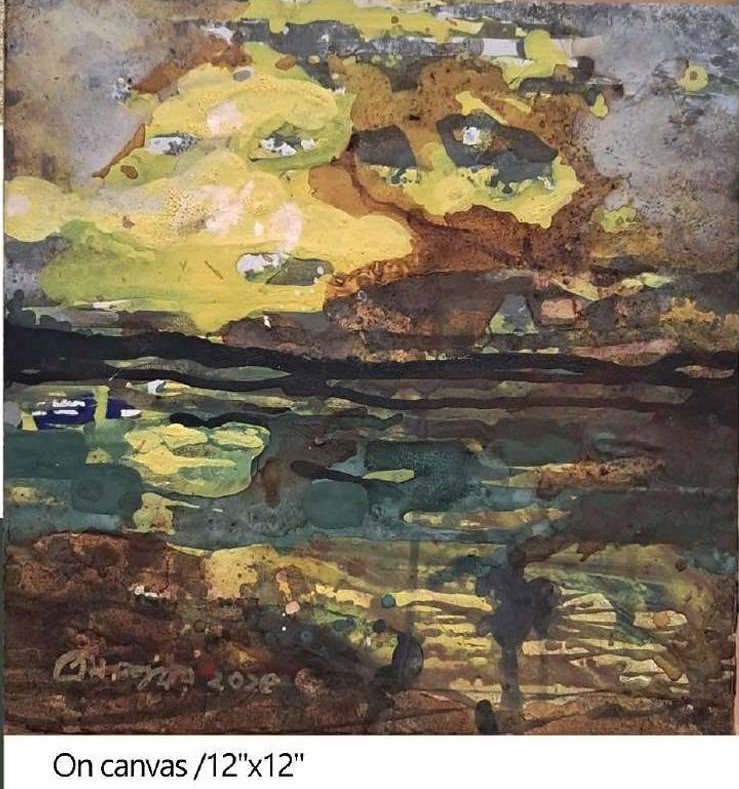
“Paradigm Shift”, the exhibition of paintings by senior artist Sankar Mondal, is an exhibition that explores precisely this idea. With 33 artworks displayed at the North Gallery of the Academy of Fine Arts, Kolkata, the exhibition stands out as one of the most engaging exhibitions I have experienced in recent times.
Sankar’s paintings go beyond the representation of visible forms. He uses visual elements as agents of evolution, transition, spirit and transformation, creating a bridge between concrete objects and abstract thought. His imagery suggests that identity is never permanent. It is constantly changing, dissolving, emerging and transforming.
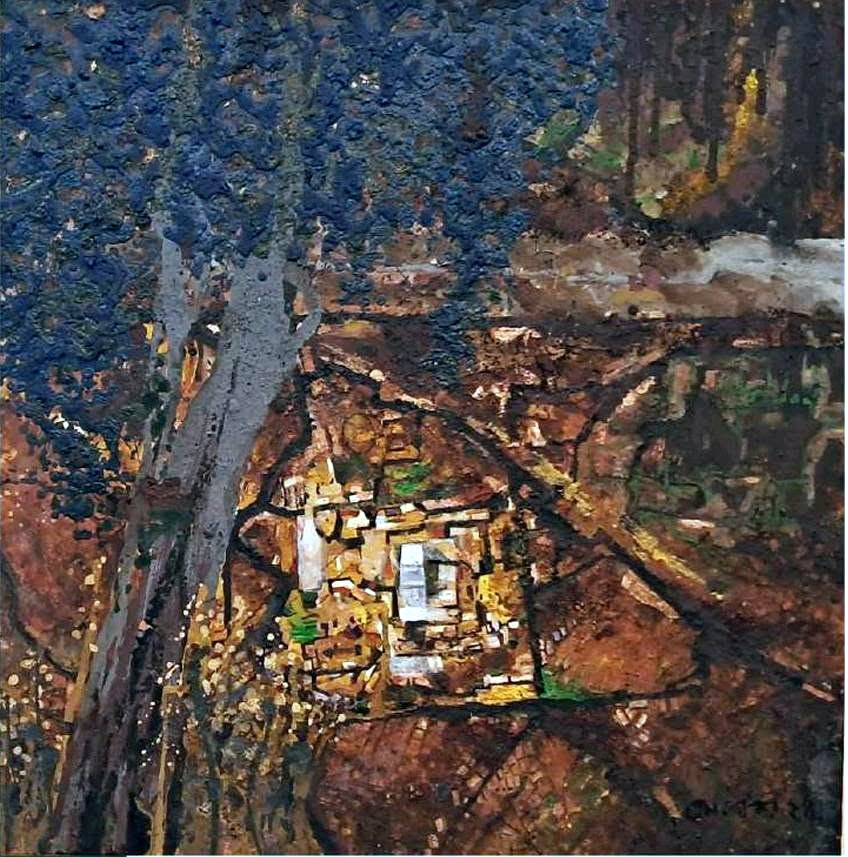
One of the most striking aspects of his work is the way he breaks conventional boundaries. Thick, coloured dots and textured marks merge around human figures, landscapes, plants and organic forms, making it difficult to determine where one form ends and another begins. This deliberate ambiguity becomes a metaphor for existence itself—where nature, human experience, memory and consciousness continuously overlap.
What makes Sankar’s practice particularly fascinating is his unusual approach to the canvas. The absence of conventional brushwork is immediately noticeable. His surfaces appear to have been created through an intuitive and physical engagement with colour and material. Layers, marks, dots, splashes and textures accumulate to create surfaces that seem almost alive. The technique gives his paintings an extraordinary sense of movement and spontaneity.
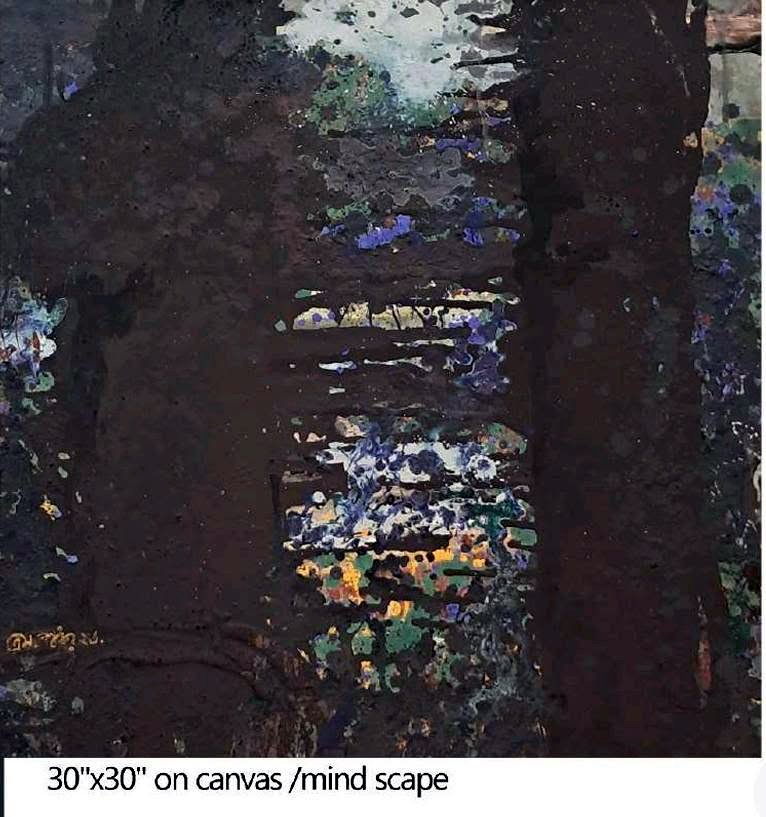
Light and shadow play an equally important role. A dark section of a forest, a sudden opening through which brilliant light enters, or a luminous passage emerging from an otherwise sombre composition can dramatically alter the emotional character of a work. These contrasts invite the viewer to look beyond the surface and enter the psychological landscape suggested by the painting.
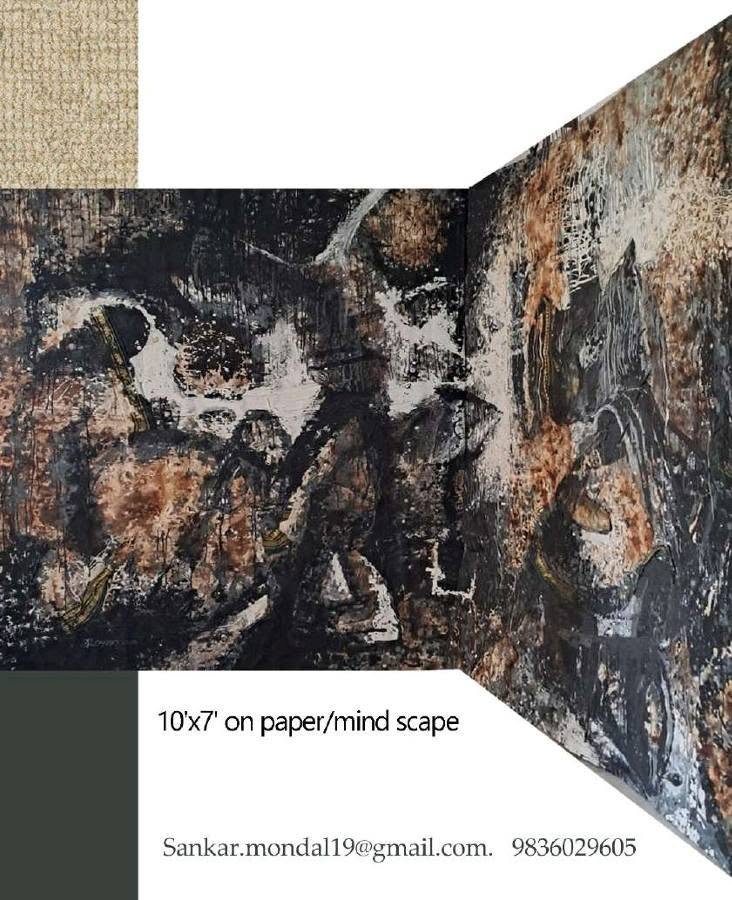
The exhibition opens with a large-scale expressive abstract work, approximately 10 × 7 feet on paper, immediately establishing the atmosphere of the show. Its heavily textured surface is dominated by charcoal black, deep brown, warm ochre and stark white, creating an earthy and weathered visual language. In places, pieces of cloth become part of the surface, adding another tactile dimension.
The energetic splatter-like marks and dense layers create the impression of a turbulent inner world. The work evokes the feeling of a storm—perhaps not a storm in nature, but one taking place within the human mind. It suggests turbulent thoughts, suppressed emotions and an inner landscape struggling to emerge. For me, it is one of the most compelling works in the exhibition.
Elsewhere, the artist creates an expressive, earthy landscape in which forms seem to emerge from a textured, almost watery environment. Layered greens, browns and darker tones create an atmosphere of mystery and movement. The forms are neither entirely abstract nor completely representational; they occupy an intriguing space between recognition and imagination.
Another striking composition is built around a dark central vertical form, surrounded by rich textures and scattered touches of blue, green, yellow and white. These fragments appear almost like pieces of memory—fleeting emotions, concealed experiences and traces of hidden life rising through darkness.
In several other works, olive green, grey, rust brown and muted yellow combine with splashes and heavily worked surfaces to create an organic, almost weathered aesthetic. The paintings sometimes recall impressionistic landscapes, lichen-covered stone or the layered surface of the earth. Yet Sankar Mondal transforms these familiar associations into something more psychological and introspective.
There are also canvases in which the artist’s sketches become visible, offering the viewer glimpses into another aspect of his creative process. These works remind us that beneath the complex textures and abstractions lies the fundamental act of drawing—the first impulse through which an idea begins to take form.
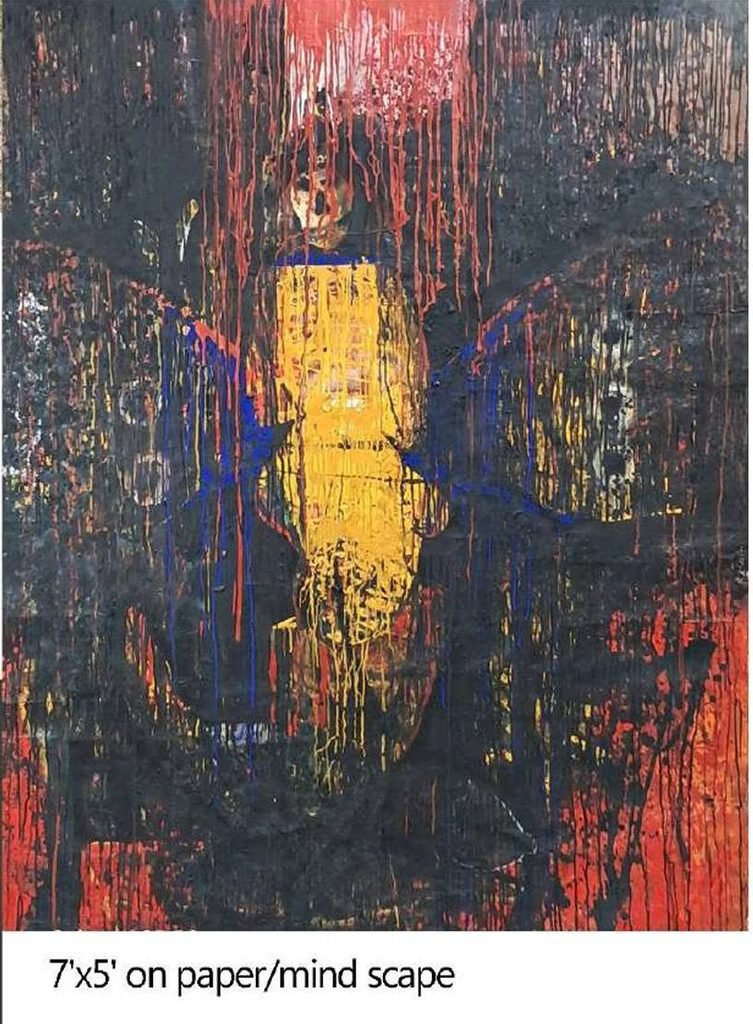
What makes Paradigm Shift particularly meaningful is that the title is not merely descriptive. It reflects the underlying philosophy of the exhibition. Sankar Mondal appears to question the fixed nature of forms, identities and perceptions. His paintings suggest that everything is in a state of transition: the human figure can dissolve into nature, nature can become memory, and memory can become an abstract emotional landscape.
The exhibition therefore becomes more than a collection of paintings. It becomes a meditation on change itself—on how we see, how we remember, how we evolve and how art can transform our understanding of reality.
For collectors, art connoisseurs and art lovers, Paradigm Shift offers an opportunity to encounter an artist who has developed a distinctive visual language through material, texture, colour and experimentation.
Overall, the exhibition is a breathtaking visual experience—one that rewards slow looking and contemplation. Sankar Mondal’s “Paradigm Shift” is not simply about changing artistic forms; it is about changing the way we perceive existence.