
Speculation is growing across political and strategic circles that Pakistan may be preparing for its biggest internal restructuring since independence. According to emerging reports, the country’s four provinces could soon be reorganised into 12 smaller administrative units, a move that has sparked intense debate both within Pakistan and beyond its borders.
Fueling these discussions is a recent statement by Pakistan’s Information Minister Abdul Aleem Khan, who reportedly indicated that the formation of smaller provinces is no longer a distant idea but an impending reality. While no official notification has been issued so far, insiders claim that final consultations between the civilian government and the military establishment have already taken place.
What the Proposed Plan Looks Like
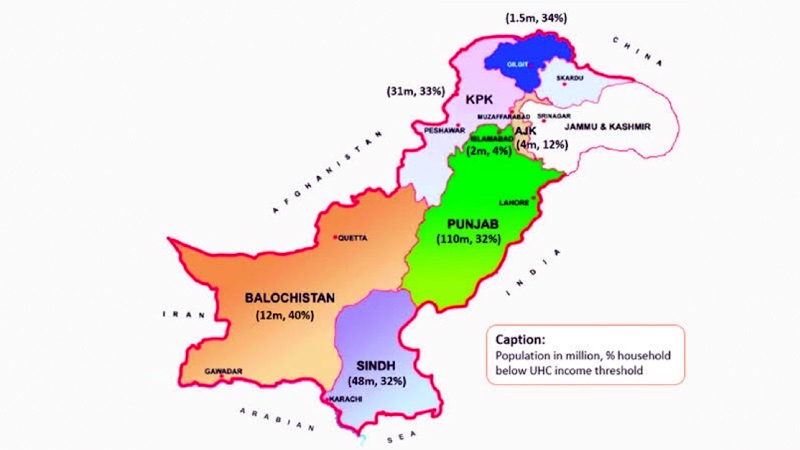
If implemented, each of Pakistan’s four provinces would be divided into three separate provinces, significantly altering the country’s administrative map.
Punjab could be split into North Punjab, Central Punjab, and South Punjab
Sindh may be reorganised as Karachi Sindh, Central Sindh, and Upper Sindh
Khyber Pakhtunkhwa is expected to become North KP, South KP, and Tribal KP, with the latter encompassing former FATA regions
Balochistan could be divided into East, West, and South Balochistan
Supporters of the proposal argue that this restructuring would decentralise power, improve governance, and ensure better representation for neglected regions.
Government’s Argument: Governance and Development
According to the Pakistani government’s stated position, smaller provinces would make administration more efficient. Decision-making would move closer to the grassroots, political dominance of a few elite groups would weaken, and development projects could be implemented faster.
Officials believe that more provincial governments and assemblies would mean more accountability, potentially helping Pakistan tackle long-standing issues of regional inequality and underdevelopment.
Rising Concerns and Political Anxiety
However, not everyone is convinced. Several analysts and observers warn that the timing of such a move is critical, especially when Pakistan is already facing economic distress, political instability, and security challenges.
Critics argue that the plan could intensify ethnic and regional tensions, particularly in sensitive areas like Balochistan and tribal regions. Some have even drawn parallels with colonial-era “divide and rule” strategies, cautioning that administrative fragmentation might deepen internal fault lines rather than heal them.
There are also fears that without broad political consensus, the proposal could trigger mass protests or civil unrest, further destabilising an already fragile system
A Defining Moment for Pakistan
Whether this restructuring becomes a turning point for better governance or a catalyst for deeper turmoil remains uncertain. What is clear, however, is that any move to redraw provincial boundaries will have far-reaching political, social, and security implications.
As Pakistan stands at this crossroads, all eyes are on how its leadership balances administrative reform with national unity.